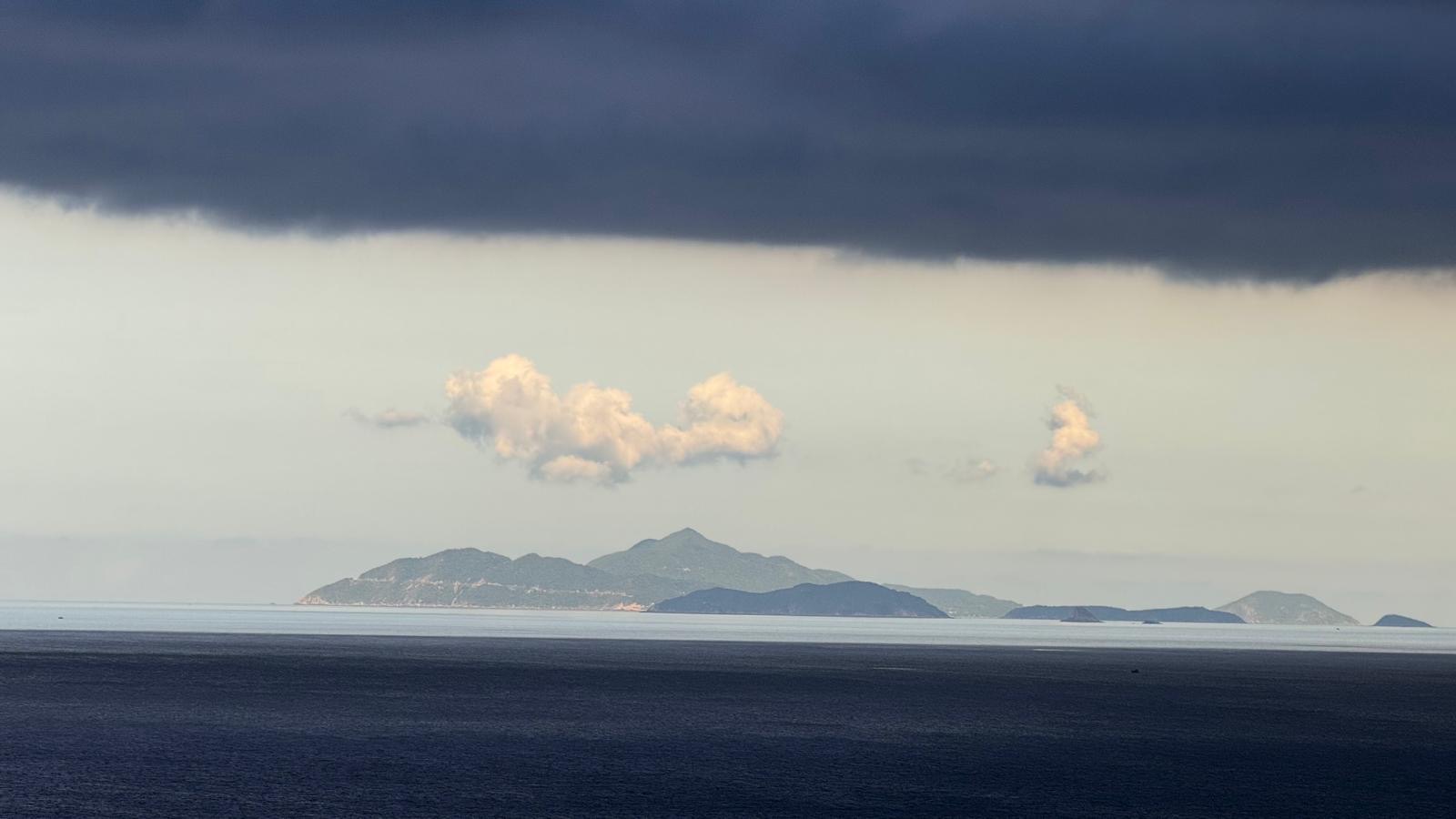
Da Nang Weather, Month by Month: The Numbers Nobody Else Prints
Da Nang's year splits in two and the split is brutal. February to August is dry: 20–115mm of rain a month, rising heat, and a sea that climbs from 24°C to 30°C. September to early December is monsoon: 310mm, then 650mm in October alone — more than February through August combined — then 430mm in November, with storms running to around 10 December. Humidity sits at 75–90% all year, so even the dry season is sticky. Ba Na Hills is frequently fogged in from September to February, and December gets just 3.5 hours of sun a day.
Da Nang weather by month: temperature, rain, sea and verdict
Long-run averages, not forecasts. The column that decides your trip is the rain one — read it before you read the temperature.
| Month | High / low °C | Rain | Sea °C | The honest verdict |
|---|---|---|---|---|
| January | 25 / 19 | 85mm | 24° | Cool-ish with a drizzle tail. A decent city and food month, a poor beach one. Tet sometimes lands here. |
| February | 26 / 20 | 25mm | 24° | The dry season starts and the rain falls off a cliff. From the third week onward this is one of the two best months of the year. |
| March | 29 / 22 | 20mm | 24° | The driest month. 29°C, low humidity by local standards, and the sea just about swimmable. The best all-round month here. |
| April | 31 / 24 | 35mm | 26° | Warming fast and still comfortable. The sea jumps two degrees. The last easy month before the furnace opens. |
| May | 34 / 25 | 85mm | 28° | Hot, sunny, and the sea is genuinely superb. Afternoon showers appear but pass. DIFF starts on the last Saturday. |
| June | 35 / 26 | 90mm | 29° | Peak heat with 7–8 hours of sun a day and a 40°C feels-like at midday. Vietnamese school holidays plus DIFF: the busiest weeks of the year. |
| July | 35 / 26 | 85mm | 30° | As hot as it gets, sea at bath temperature, and the domestic peak in full swing. Use the beach at 06:00 and again after 17:00. |
| August | 34 / 25 | 115mm | 30° | Still hot and busy. Rain ticks up and the first storm risk creeps in during the last week or two. |
| September | 32 / 24 | 310mm | 29° | The switch flips. Rain nearly triples, the typhoon window opens, red flags go up on the beach and Ba Na starts fogging in. |
| October | 30 / 23 | 650mm | 28° | The wettest month in the calendar and the flood and typhoon peak. More rain than February through August combined. Five-star rates can halve. |
| November | 28 / 22 | 430mm | 27° | Still very wet, with storms running to about 10 December. Korean winter-escape arrivals keep hotels fuller than the weather deserves. |
| December | 25 / 20 | 215mm | 25° | Tapering, grey and cool, with only about 3.5 hours of sun a day. Fine for food, museums and day trips. Not a beach month. |
Figures are long-run monthly averages compiled from climate records for the coastal city, checked August 2026. A dry October happens; it is not something to plan a trip around. Sea temperatures are surface averages off My Khe.
The whole climate, in four figures
If you remember nothing else from this page, remember these.
The same twelve months, as a strip
Colour-coded, with the crowd bar showing local demand rather than Western high season — full bars mean Vietnamese school holidays, Tet or DIFF.
Full analysis of what each window is actually like in the best-time-to-visit guide, and the survival plan for the wet end in the rainy season guide.
The dry season is not dry, it is just not raining
Humidity here sits at 75–90% every month of the year. That is the fact the climate-average blogs leave out, and it changes how you plan a day more than the temperature does.
What it means in practice: a 35°C June afternoon has a feels-like around 40°C, laundry does not dry, camera lenses fog when you walk out of an air-conditioned café, and a 26°C February evening is still warm enough to sit outside in a t-shirt. It also means the beach is at its best at the two ends of the day and close to unusable in between — which is exactly what locals do. My Khe is busiest at 05:00 and again from 17:00, and nearly empty at noon.
The one genuine cool spell is late December through January, when highs drop to 25°C and a light layer is useful in the evening. And 35km west, Ba Na Hills runs about 8°C cooler than the coast at any time of year — a January morning up there is properly cold in a t-shirt.
Swim season and surf season are exact inverses
This is the single most useful thing on this page and almost nothing ranking for Da Nang says it: the months you can swim are the months you cannot surf, and vice versa.
Swim between the flags, and take that literally. The sea off My Khe is calm and swimmable from roughly March to August; from September the swell builds and red flags go up, and the water is effectively closed to casual swimmers October to December. The real danger is not sharks or jellyfish — it is rip currents, which drown people here most years. Lifeguards staff the flagged sectors roughly 05:00–19:00. Look for a darker, calmer-looking channel with debris moving out to sea: that is the rip, and it is the bit that looks safest.
The flip side: the swell that closes the beach to swimmers is what makes the surf season, which runs roughly November to March. Lessons run about $30–50 and the schools on the My Khe strip work through the months the sunbed operators pack up. If you came to swim, aim March to August. If you came to surf, aim November to March. There is no month that does both well.
One more seasonal consequence worth planning around: the Cham Islands effectively close in the same window. The Cham Islands run a March to August/September season only. From October to February the sea state cancels 40–60% of departures against roughly 5% in season, so treat the winter months as closed rather than risky. Book the small-group speedboat operators: the cheap mass-market snorkel day trips have been nicknamed “Scam Island” in more than one Reddit thread for overcrowded boats and bait-and-switch inclusions.
Ba Na Hills has its own weather, and it ruins more trips than the rain does
Ba Na Hills sits at 1,487m with its own microclimate and is frequently fogged in when the city below is clear — most reliably between September and February, when it is a whiteout lottery. There is no weather refund. Check the mountain forecast the night before, not the city one, and if it looks bad move the day and go to the Marble Mountains instead.
Check the mountain forecast, not the city one. They are frequently different, and the difference costs 950,000₫ (about $37) with no refund. The Marble Mountains at 40,000₫ (about $1.60) are the standing wet-weather substitute — the caves are more atmospheric in drizzle than in sun.
Typhoons, floods and what the historic numbers actually look like
The typhoon window opens in September and runs to about 10 December, with October the peak. Most systems that affect Da Nang pass through in one or two days rather than settling in, and the city drains fast — that is its real advantage over Hoi An, which sits on a floodplain and floods properly.
The historic reference point is October 2022, when about 700mm fell in a single day and the city centre flooded. That is the extreme, not the norm, but it is the reason local advice about October is so consistent. The more routine version is a few days of streets under 20–40cm of water in the worst weeks, transport disrupted, and everything back to normal by the weekend.
The other monsoon consequence nobody writes about is the sand itself. Between October and December 2024 an erosion episode took roughly 100 metres of My Khe beach and its dike, with damage at Man Thai too. It recurs to some degree every monsoon and the city rebuilds each dry season — worth knowing if you are looking at beachfront photos taken in March and travelling in November.
What to book when the forecast is the deciding factor
Two rules. In the dry months you can decide over breakfast. Between September and February, keep anything that depends on a view — Ba Na, Hai Van, the islands — flexible until 48 hours out.
Da Nang weather FAQ
How much does it rain in Da Nang in October?
About 650mm, which is more than February through August put together. November is 430mm and September 310mm. For comparison, March gets 20mm. October is also the typhoon and flood peak, with storms running to around 10 December.
What is the driest month in Da Nang?
March, at about 20mm, followed closely by February at 25mm and April at 35mm. That trio is the dry-season core: warm at 26–31°C, low rain, and a sea between 24°C and 26°C.
How warm is the sea in Da Nang?
It runs 24°C from January to March, 26°C in April, 28°C in May, 29°C in June, and peaks at 30°C in July and August before easing back through the autumn — 29°C in September, 28°C in October, 27°C in November and 25°C in December. Warm enough to swim most of the year; whether you are allowed to is a different question.
Does it rain all day in Da Nang's rainy season?
No. Even in October the pattern is heavy bursts rather than constant drizzle, and typhoon systems usually pass through in one to two days. The city drains fast. What you lose is the beach — red flags are effectively permanent from October to December — and any activity that depends on a view.
Is Ba Na Hills always foggy?
Not always, but often enough to matter, and most reliably between September and February. It sits at 1,487m with its own microclimate and is regularly clouded in while the beach below is sunny. There is no weather refund on the 950,000₫ ticket, so check the mountain forecast the night before rather than the city one.
How hot does Da Nang get?
Highs of 35°C in June and July, with 75–90% humidity putting the feels-like around 40°C in the afternoon. Locals structure the day around it: beach and exercise before 07:00, indoors from about 11:00 to 16:00, out again after 17:00. Do the same and the heat stops being a problem.
What is the coldest month in Da Nang?
January, at 25/19°C, with December close behind at 25/20°C. Nobody would call it cold, but it is cool enough that a beach holiday in January disappoints — the sea is at 24°C, the sky is grey and December averages only 3.5 hours of sun a day.
When do typhoons hit Da Nang?
September to about 10 December, with October the peak. The city handles them better than most of the coast because it drains quickly, and the practical impact is usually one or two disrupted days rather than a written-off week. The extreme reference is October 2022, when roughly 700mm fell in a single day.
Continue planning
Eat it with a local
Da Nang food tours & tastings — guided street-food crawls and cooking classes with vetted operators, most with free cancellation.