Da Nang vs Hoi An: Which Should You Base In? (2026)
The method is not in dispute: base in one, day-trip the other. They are 30km and 30–40 minutes apart, the yellow Bus No. 1 runs the route every 20–30 minutes for about 30,000₫, and splitting your nights between them wastes half a day moving luggage. Which one you pick is genuinely split. Hoi An wins on charm and loses on overtourism. Da Nang wins on food, beach, cost and modern comfort — and on the point nobody makes: it drains. Hoi An sits on a floodplain and floods badly. From September to December that is the whole argument.
Stay in one. Day-trip the other. Do not split your nights.
Years of forum threads are unanimous on this and split on everything else.
Da Nang and Hoi An are 28–30km apart along a flat coast road, 30–40 minutes by car and 45–60 by scooter. That is close enough that moving hotels mid-trip costs you a check-out, a check-in and an afternoon, and buys you nothing. Pick a base and run the other as a day trip.
Getting between them is trivial and cheap. The yellow Bus No. 1 costs about 30,000₫ and runs every 20–30 minutes from 05:30 to 17:50. A Grab is 250,000–350,000₫ one way. Tourist shuttles sit in the middle at 120,000–250,000₫ with fixed departures. The Hoi An day-trip page times all three; the practical catch is that the bus stops running back at around 17:50, which is exactly when Hoi An gets good.
One piece of context most guides have not caught up with: since 1 July 2025 Hoi An is legally inside Da Nang city. The province of Quang Nam was absorbed and the city went from about 1,285 km² to 11,860 km². It changes nothing about the journey and everything about how you should read older visitor statistics.
Which one should you sleep in?
Base in Da Nang
Better food, a real beach, cheaper rooms, a ten-minute airport, and it drains after a typhoon while Hoi An is still under water. You get the Marble Mountains 11km away, Son Tra to the north, the Hai Van Pass 20km up the coast and Hoi An 30km down it. The trade is atmosphere: this is a modern high-rise city and the evenings are quiet outside An Thuong. Full verdict →
Compare Da Nang hotels ↗Base in Hoi An
One of Asia's best-preserved old towns, lantern-lit, walkable and genuinely lovely between 06:00 and 09:00 and again after 18:00. The complaints are consistent — “shops shops souvenirs coffee souvenirs shops”, midday coach crush, and prices well above Da Nang for the same meal. And it floods: the old town is on a floodplain and goes under most autumns. Full verdict →
Compare Hoi An hotels ↗Da Nang vs Hoi An, category by category
Twelve categories, a winner in each. The ones that decide most trips are food, cost and flooding.
| Category | Da Nang | Hoi An | Winner |
|---|---|---|---|
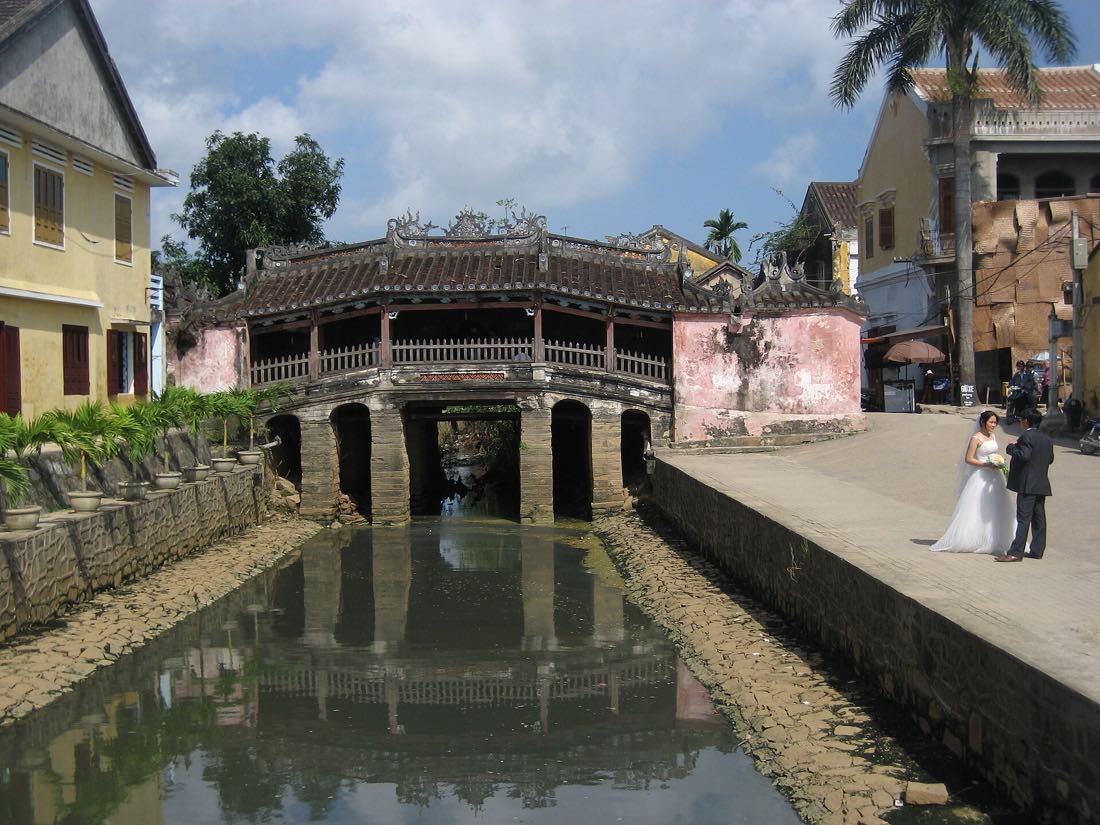
| Atmosphere and charm | Modern high-rise beach city. No old quarter, very little traditional architecture. | A UNESCO old town of merchant houses, lanterns and the restored Japanese Covered Bridge. | Hoi An |
| Food | Its own regional canon and 44+ Michelin-listed addresses since 2024, most under 70,000₫ a dish. | Cao lầu, white rose and bánh mì with a global reputation — excellent, but a narrower and more touristed field. | Da Nang |
| Beach | Thirty kilometres of wide sand with lifeguards, sunbeds at ~40,000₫ and surf schools. | An Bang and Cua Dai, 4–5km from the old town by bike, quieter and more eroded. | Da Nang |
| Cost | Hostels $8–12, three-stars $19–25, beachfront four-stars $40–60, five-star average ~$84. | Higher food and drink prices in the old town for equivalent quality; good-value boutique stays outside it. | Da Nang |
| Flooding and typhoons | Drains well and recovers within a day or two. City life continues through the monsoon. | Sits on a floodplain. The old town floods severely most autumns and the streets go under. | Da Nang |
| Crowds | Absorbs its visitors — 30km of coast and a big city dilute them. | Concentrated into a few hundred metres of old town. Midday is a coach crush. | Da Nang |
| Walkability | An Thuong's grid, the beach promenade and two riverside walks. Everywhere else, motorbike parking on the pavements. | Almost entirely walkable and largely car-free in the protected zone. | Hoi An |
| Getting to the airport | DAD is 2–3km from the river, 10–15 minutes to the beach. | 30km and 40–55 minutes, $15–25 by pre-booked transfer. | Da Nang |
| Nightlife | A bar town: rooftops, taprooms, a couple of clubs. Modest but real. | Effectively dead by 22:00 outside a handful of riverside bars. | Da Nang |
| Shopping and tailoring | Han Market áo dài tailoring upstairs, malls, Lotte Mart. | Hundreds of tailors, 24-hour turnarounds, leather and lanterns. The reason a lot of people come. | Hoi An |
| Day-trip reach | Marble Mountains 11km, Son Tra 9km, Hai Van 20km, Ba Na 35km, My Son 69km, Hue 95–100km. | My Son 40km and the beach. Everything north takes an extra hour each way. | Da Nang |
| Working and staying a month | 150+ Mbps fibre for $10–20/mo, coworking from about $82, apartments $300–500. | Charming for two weeks; thin infrastructure and limited housing stock beyond that. | Da Nang |
Rated August 2026. Hoi An's Old Town heritage ticket is 120,000₫ and covers entry to a set number of heritage houses; the streets themselves are free to walk.
Who should base where
The category table gives Da Nang nine of twelve, which overstates it — because for some people the three Hoi An wins are the entire trip.
| You are | Base in | Why | Verdict |
|---|---|---|---|
| First-timers, 3–4 nights | Hoi An | If this is your one shot at central Vietnam and you want atmosphere, sleep in the old town and day-trip the Marble Mountains and the Cham Museum. Da Nang will not move you in three days. | DEPENDS |
| First-timers, 5+ nights | Da Nang | Enough time that liveability starts to matter and the day-trip reach pays off. Hoi An becomes an evening, which is the best way to see it anyway. | WORTH IT |
| Families | Da Nang | Indoor options when it rains, cheap four-stars with pools, lifeguarded beach and a ten-minute airport. Hoi An's charm is lost on anyone under ten. | WORTH IT |
| Couples and honeymoons | Hoi An | The lanterns, the boutique riverside stays and the tailoring are exactly what this trip is for. Book one night at a Da Nang beach resort at the end if you want sand. | WORTH IT |
| Food travellers | Da Nang | A wider canon, far more Michelin-listed addresses, the seafood strips and the market food halls. Day-trip Hoi An for cao lầu and come back. | WORTH IT |
| Long-stayers and nomads | Da Nang | Not close. Fibre, coworking, gyms, apartments and an airport. Long-stayers who tried Hoi An first almost all end up moving north. | WORTH IT |
| Anyone travelling Sept–Dec | Da Nang | October drops about 650mm and November 430mm. Da Nang drains and carries on; the Hoi An old town floods and the day trips stop. | WORTH IT |
Both towns are cheap enough that the wrong choice costs you convenience rather than money. The one genuinely expensive mistake is splitting four nights between them.
Da Nang drains. Hoi An floods.
This is the tiebreaker and almost nothing ranking for this comparison mentions it. Central Vietnam's monsoon runs from September to early December: September 310mm, October about 650mm, November 430mm, December 215mm. Typhoons here typically pass in a day or two rather than settling in.
The difference is what happens afterwards. Da Nang is a modern city with drainage and it recovers fast — the streets are usable again within a day and normal life continues. Hoi An's old town sits on the Thu Bon floodplain and goes under, with boats on the streets in the worst weeks. It is photogenic and it is also the end of your itinerary. Locals make this point repeatedly and visitors almost never hear it before booking.
If your dates are inside that window, base in Da Nang, keep the Hoi An day trip flexible, and read the rainy season survival guide before you commit to anything non-refundable. The compensation is real: five-star rates can halve in October and November.
Which base wins, month by month
Rainfall figures are the long-run monthly averages. The verdict is about where you should sleep, not whether to come.
Averages, not forecasts. Storms here typically clear in one or two days and Da Nang is usable again immediately — which is the entire basis for the recommendation above.
Beds in both towns, and the road between them
Whichever you pick, the other is a 30,000₫ bus ride away. Compare rates in both before deciding — the gap is real: Da Nang's beachfront four-stars run $40–60 against Hoi An boutique pricing.
Da Nang vs Hoi An FAQ
Should I stay in Da Nang or Hoi An?
Stay in Da Nang if you have five or more nights, are travelling with children, are here to eat, or your dates fall between September and December. Stay in Hoi An if you have three or four nights and atmosphere is the point. Either way, day-trip the other one rather than splitting your nights.
How far is Hoi An from Da Nang?
About 28–30km, 30–40 minutes by car and 45–60 by scooter along a flat coast road. The yellow Bus No. 1 does it for around 30,000₫ every 20–30 minutes between 05:30 and 17:50, a Grab is 250,000–350,000₫ and shuttles run 120,000–250,000₫.
Can you day-trip Hoi An from Da Nang?
Easily, and it is the standard move. Go in the late afternoon and stay into the evening — the old town is unpleasant in the midday coach crush and lovely once the lanterns are lit. Note that the cheap bus stops running back around 17:50, so plan a Grab or shuttle for the return.
Is Hoi An more expensive than Da Nang?
Yes, for food and drink in the old town, and often for accommodation of the same standard. If food is the tiebreak, restaurantshoian.com settles it — Hoi An's fifty best, ranked and priced. Da Nang's hotel market is structurally cheap — beachfront four-stars at $40–60 and a five-star average around $84 — because the city overbuilt between 2016 and 2019.
Does Hoi An really flood?
Yes, most autumns. The old town sits on the Thu Bon floodplain and the streets go under in the worst weeks between September and November. Da Nang drains well and recovers within a day or two. This is the single most under-reported difference between the two.
Is Hoi An part of Da Nang now?
Administratively, yes. Da Nang absorbed Quang Nam province on 1 July 2025, so Hoi An and My Son are both inside the city limits — two UNESCO sites in one city. It makes no practical difference to your trip, but it does mean any post-2025 visitor statistic covers both.
Which has the better beach, Da Nang or Hoi An?
Da Nang. My Khe is 30km of wide sand with lifeguards, sunbeds at about 40,000₫ and surf schools; Hoi An's An Bang and Cua Dai are 4–5km from the old town, quieter and more affected by erosion. Both close to swimming from roughly October to December.
Where do long-term expats live, Da Nang or Hoi An?
Da Nang, increasingly. Hoi An suits a two-week stay; Da Nang has the fibre, the coworking, the gyms, the hospitals and the airport. Long-stayers who start in Hoi An very often move north — see the nomad guide.