Da Nang in the Rainy Season: What Closes, What Still Works, and What It Saves You
The monsoon runs September to about 10 December, peaking with 650mm in October. You will not swim: red flags go up in September and the sea is effectively closed to casual swimmers October to December. The Cham Islands shut, and Ba Na Hills becomes a fog lottery. What you get instead is a city that drains in hours rather than days, typhoons that pass through in one or two, and five-star rates that can halve. Da Nang's monsoon is a genuine value play for anyone here to eat, be massaged and see things indoors. It is a wasted trip for anyone here to lie on sand.
What the monsoon actually is here
Da Nang's year splits cleanly in two and almost no guide says how hard. February to August is dry; September to early December is monsoon. October alone gets about 650mm of rain — more than February through August combined — with November close behind at 430mm and storms running to around 10 December. The compensation is real: typhoons here pass in a day or two, the city drains fast, and 5-star rates can halve. But if you are coming for the beach, late February to April is the answer and it is not close.
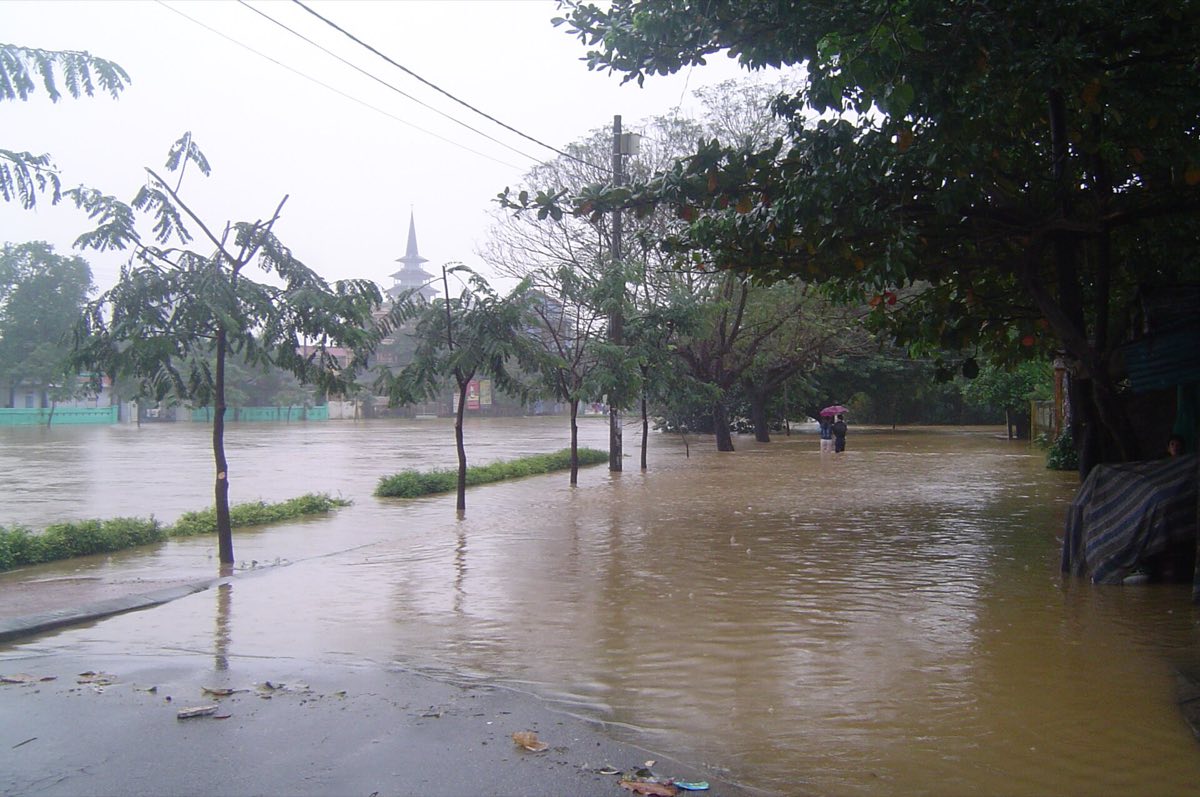
The thing that separates Da Nang from the rest of this coast is drainage. Typhoon systems pass through in one or two days and the city recovers fast — a morning of flooded streets, an afternoon of pumping, and normal life by the next day. Thirty kilometres south, Hoi An sits on a floodplain and floods properly, sometimes for a week, with boats in the Old Town streets. If you are travelling this coast between September and December, that difference alone is a reason to base yourself in Da Nang and day-trip Hoi An rather than the other way round. It is the strongest argument in the whole Da Nang versus Hoi An debate and hardly anyone makes it.
The routine version of a bad week is streets under 20–40cm of water in the low-lying city-side blocks, Grab surging, some tours cancelled and everything back by the weekend. The extreme version is October 2022, when about 700mm fell in a single day. That is the reference point locals use, and it is why October advice is so uniform.
What closes and what stays open in the monsoon
The honest split. Everything in the top half of this table is off the menu from roughly October to early December; everything in the bottom half is why the trip is still worth taking.
| What | Monsoon status | The detail | Verdict |
|---|---|---|---|
| Swimming at My Khe | Effectively closed | Red flags go up as the swell builds in September and the beach is unswimmable for casual swimmers October to December. Lifeguards still staff the flagged sectors, but the flags are not green. Rip currents drown people here most years and the monsoon is exactly when they are worst. | SKIP |
| Cham Islands | Closed in practice | The islands run a March to August or September season only. From October to February the sea state cancels 40–60% of departures against roughly 5% in season, so treat the winter months as closed rather than risky. Do not build a trip around a boat with a coin-flip chance of sailing. | SKIP |
| Ba Na Hills and the Golden Bridge | A fog lottery | The mountain sits at 1,487m and is frequently clouded in from September to February while the coast is clear. The 950,000₫ (~$37) ticket carries no weather refund. If you go, go on 48 hours' notice with a clear mountain forecast, not a booking made a month ago. | DEPENDS |
| Hai Van Pass | Often pointless | The whole product is the view, and in cloud there is no view. Jeep and easy-rider operators run anyway. Keep it flexible and go on a bright gap day — they do occur, even in October. | DEPENDS |
| Mikazuki water park and onsen | Open, and the hero | An indoor dome water park with a genuine Japanese onsen, about 10km northwest, open year-round. 350,000₫ adult and 170,000₫ child on a weekday, 400,000₫ and 250,000₫ at weekends, onsen included, Mon–Fri 09:00–22:00. The single best rainy-day answer in the city, especially with children. | WORTH IT |
| Massage and spas | Open, and better value than ever | 250,000–450,000₫ an hour (about $10–18) plus a 50,000–100,000₫ tip. This is the standing wet-afternoon play and one of the best-value things in Da Nang at any time of year. Tiers and what to avoid are in the spa guide. | WORTH IT |
| The Cham Museum and Da Nang Museum | Open | The Museum of Cham Sculpture is 60,000₫ (about $2.40) and holds the world's largest Cham collection — small, world-class and an hour well spent. The new Da Nang Museum in the restored French colonial city hall on Bach Dang was free through 31 December 2025; the current fee is unverified, so check at the door. | WORTH IT |
| Cooking classes | Open, and better in the rain | Market trip plus five dishes, typically $25–45 and three to four hours, mostly under cover. A wet morning is the ideal time for it — see the cooking class guide. | WORTH IT |
| Market food crawls | Open | Con Market and Han Market are roofed food halls, which is exactly what you want in a downpour. Bún chả cá at 15,000–45,000₫, bánh xèo at 7,000–20,000₫ a piece, and kem bơ at 8,000–30,000₫. Start at the markets guide. | WORTH IT |
| The café scene | Open, and the point | Da Nang has a genuinely serious coffee culture and a Vietnamese coffee runs 25,000–75,000₫ (about $1–3). Rain is what the third-wave rooms and the work cafés were built for. The café guide has the ones worth crossing town for. | WORTH IT |
| Lotte Mart | Open | Four floors of Korean hypermarket and the default place to lose two hours and buy souvenirs when it will not stop. Unglamorous and genuinely useful. | DEPENDS |
Checked August 2026. Note also that Da Nang Downtown (the old Asia Park, with the Sun Wheel) closed permanently on 3 September 2025 and Helio Center has been suspended since 5 September 2025 — both were standard rainy-evening recommendations and both are gone. See what closed.
What the rain actually buys you
October and November are the deep trough in a city that is otherwise running record visitor numbers, and the discount is not marketing — it is real, and it is largest at the top of the market.
Five-star rates can halve. Da Nang overbuilt hotels between 2016 and 2019 and never fully absorbed the supply, so the city already averages about $84 a night for a five-star and $40–60 for a beachfront four-star. Take that into the monsoon trough and the properties charging $150–300 in March become genuinely accessible. The InterContinental end of the market ($400–700+) discounts too, though less proportionally.
What does not move much: hostels at $8–12 and three-stars at $19–25 were never expensive enough to discount meaningfully. Food does not move at all — a 25,000–70,000₫ bowl of mì Quảng costs the same in October as in March. So the monsoon saving is concentrated entirely in the room, which means the play is obvious: book a much better hotel than you would otherwise, and treat the room as part of the itinerary. A rainy week in a beachfront five-star with a pool, a gym and a spa is a different holiday from a rainy week in a $20 room three blocks inland.
The other quiet compensation is space. October and November are the emptiest months of the year at every attraction in the city. The Marble Mountains caves, which are more atmospheric wet than dry, are close to deserted. So is Hoi An between floods.
How late you can leave decisions in the monsoon months
The erosion story nobody publishes
Between October and December 2024 an erosion episode took roughly 100 metres of My Khe's sand and its protective dike, with further damage at Man Thai. It recurs to some degree every monsoon, the city rebuilds each dry season, and the cycle is now a standing local news story rather than an emergency.
Why it matters to you: the beachfront photographs on every hotel listing were taken in March. If you arrive in November expecting the wide, groomed 30-kilometre strip in the marketing, you may find sections fenced, machinery working and the dune line much closer to the promenade than the pictures suggest. Nothing dangerous, nothing that ruins a trip — but it is another reason the monsoon is not a beach holiday. Full context on the sand itself is in the My Khe guide and the beaches comparison.
The wet-weather arsenal, priced
Everything here works in a downpour. Two of them are among the best-value things in the city at any time of year.
Da Nang rainy season FAQ
When is the rainy season in Da Nang?
September to about 10 December. September brings 310mm, October 650mm, November 430mm and December 215mm as it tapers. October is both the wettest month and the typhoon and flood peak. February to August is the dry half of the year, with March the driest month at about 20mm.
Is it worth visiting Da Nang in the rainy season?
If you came for food, spas, museums, cooking classes and day trips, yes — and it is materially cheaper, with five-star rates able to halve. If you came for the beach, no. The sea is red-flagged from October to December and you will not swim.
Does Da Nang flood?
The low-lying city-side streets flood in the worst weeks, typically 20–40cm for a day or so, and the city drains fast afterwards. That is the key difference from Hoi An, which sits on a floodplain and can be under water for days. It is the strongest practical argument for basing in Da Nang between September and December.
Can you swim in Da Nang in October?
Not safely, and not legally in the flagged sectors when the red flags are up — which they will be. The swell builds from September and rip currents are at their most dangerous in the monsoon. Hotel pools and the indoor Mikazuki dome are the realistic substitutes.
What is there to do in Da Nang when it rains?
The Mikazuki indoor water park and onsen at 350,000–400,000₫, a 250,000–450,000₫ massage, the Cham Museum at 60,000₫, the new Da Nang Museum, a cooking class at $25–45, the roofed Con and Han market food halls, the café scene, and Lotte Mart. The full ranked list is on the rainy-day page.
Do hotel prices really drop in the rainy season?
At the top of the market, yes — five-star rates can halve in October and November. At the bottom they barely move, because $8–12 hostels and $19–25 three-stars had nowhere to go. Food prices do not change at all. The practical implication is to book a better hotel than you normally would.
How bad are typhoons in Da Nang?
Disruptive rather than dangerous for a visitor in most years. Systems usually pass in one or two days, flights are cancelled for a day rather than a week, and the city recovers quickly. The extreme reference is October 2022, when roughly 700mm fell in a day. Build one buffer day into a tight October or November itinerary.
Should I go to Hoi An instead in the rainy season?
No — the other way round. Hoi An floods and Da Nang drains. Base in Da Nang and day-trip Hoi An on a dry morning, on the 30,000₫ Bus No. 1 or a 250,000–350,000₫ Grab. That way a flooded week costs you a day trip rather than your accommodation.