Man Thai and the Son Tra Mainland: The Budget-Value Base (2026)
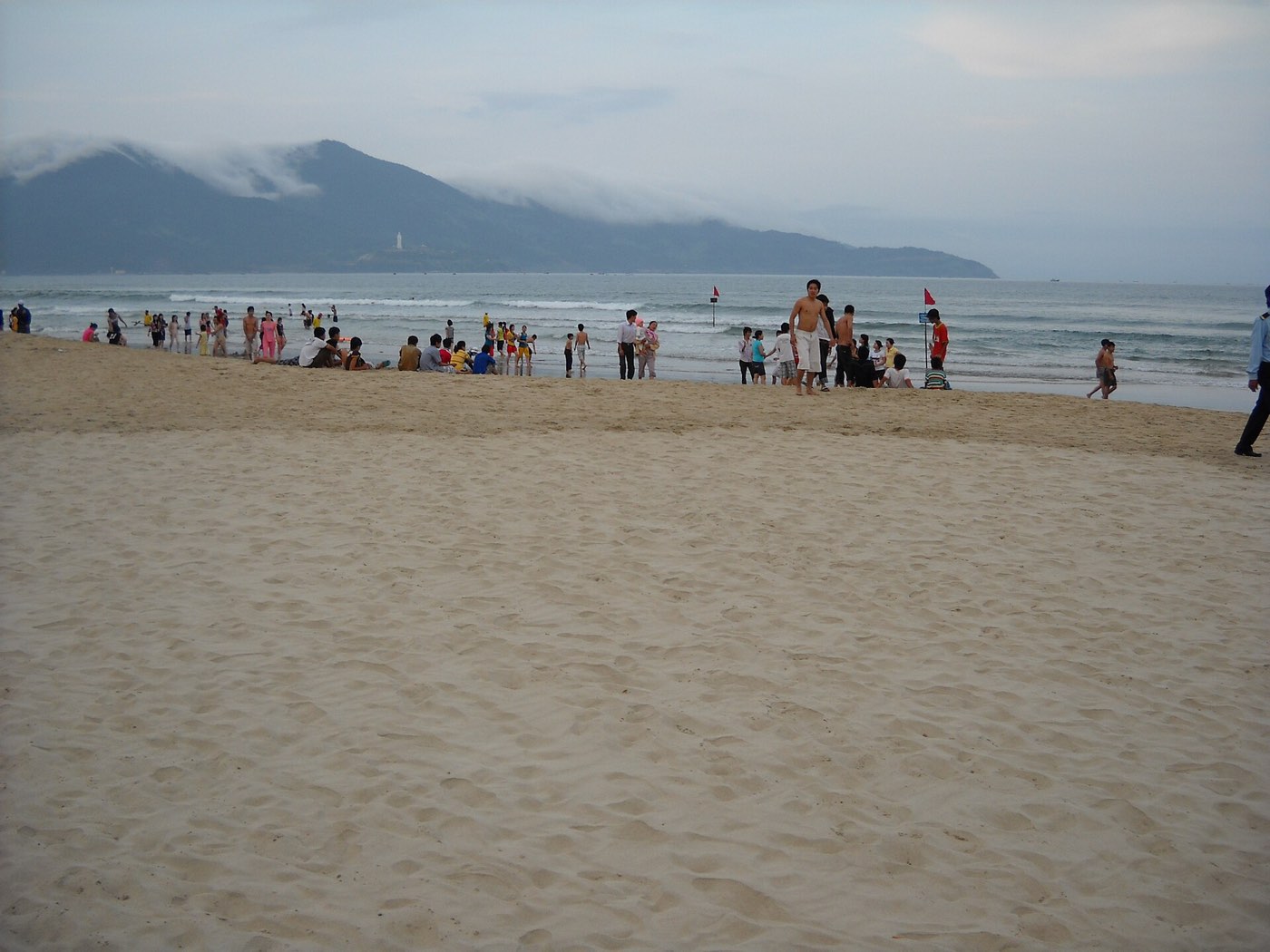
Man Thai sits at km 2.5, at the northern top of the beach strip where the sand runs into the Sơn Trà headland, and it is still a working fishing village: basket boats on the sand, nets drying, and seafood coming off the boats rather than out of a tank. It is the budget-value alternative to the beach side proper — studios $200–350 and one-beds $280–450 a month, roughly half what An Thuong beachfront charges — and the beach is two minutes away. What you give up is real: the expat scene is sparse, coworking is minimal, and there is no walkable grid of cafés. You will need a bike.
Where the beach strip stops being a beach strip
Two kilometres north of the hotel wall, the boulevard turns back into a village.
The coast road runs south to north as Trường Sa, then Võ Nguyên Giáp, then Hoàng Sa — and Hoàng Sa is the Man Thai end. This is where the towers thin out, the beach narrows, and the working waterfront takes over. Basket boats, the round woven coracles that are the signature image of this coast, sit on the sand here because fishermen actually use them, not because a tour operator parked them for photographs. The fleet goes out at night and comes back around dawn.
Administratively you will see three names for roughly the same area: Mân Thái itself, An Hải Bắc inland of it, and Thọ Quang north towards the port. Treat them as one neighbourhood — the Son Tra mainland, the flat ground between the beach and the base of the peninsula.
Positions from here, measured down the coast road: the My Khe strip is 2km south, An Thuong 4.5km south, the Marble Mountains 8.5km south and Hoi An 27.5km south. Going the other way, Lady Buddha and Linh Ứng pagoda are about 2.5km north and the Son Tra peninsula loop starts immediately behind them. Hai Chau and the airport are about 5km west over the Han River Bridge. Being 15–20 minutes by bike from a 4,400-hectare jungle reserve with the world's most important red-shanked douc langur population is the underrated part of living here.
Man Thai against the beach side, monthly
The entire case for this neighbourhood is one column. These are long-stay rates, because Man Thai is a long-stay proposition — the nightly market here is thin guesthouses and a handful of small hotels, not a hotel wall.
| What | Man Thai | An Thuong / beachfront | The verdict |
|---|---|---|---|
| Studio, monthly | $200–350 | $300–500 in the An Thuong grid, $450–700 on the beachfront | WORTH IT |
| One-bed, monthly | $280–450 | $400–650 in the grid, $600–1,000 for a sea view | WORTH IT |
| Distance to sand | About 2 minutes on foot | 5–10 minutes from An Thuong, across the road from the strip | WORTH IT |
| Coworking | Minimal — day desks from about $5, plus a nomad-hotel option | Seaview $72–85/mo, ACE about $100/mo, plus a dozen laptop cafés | SKIP |
| Walkable food and cafés | Local quán and seafood, almost no western café scene | Eight blocks of brunch, specialty coffee and craft beer | SKIP |
| Scooter | Effectively required — $40–60 a month | Optional in An Thuong; genuinely optional | DEPENDS |
Add $50–80 a month for utilities either way — air-conditioning is the bulk of it — and $10–20 for fibre at 150+ Mbps. The saving here is real but it is roughly $150–250 a month, so weigh it against a year of not being able to walk anywhere.
The two rules that catch people out up here
Vietnam recognises only 1968 Vienna Convention international driving permits. The IDPs issued in the United States, Canada, Australia, Ireland and New Zealand are 1949 Geneva permits and are not valid here. British permits are the one most often got wrong: the UK has issued 1968 permits since 2019 and gov.uk lists Vietnam as a 1968 country, so a UK licence carrying category A plus a Post Office permit costing about $7 is legal. Riding anything over 50cc without a recognised permit is illegal. Since Decree 168 took effect on 1 January 2025 the fine is 2–4 million₫ up to 125cc and 6–8 million₫ above it, with the bike held for seven working days — and, the part that actually matters, your travel insurance is void if you crash. Enforcement in Da Nang is stricter than in most Vietnamese beach towns, with regular checkpoints on Vo Nguyen Giap, the bridges and the Hai Van approach. Legal routes: a genuine 50cc or e-scooter, a 1968 permit if your country issues one, or converting a licence once you hold a residence card.
2–4 million₫ and a void insurance policyThe Son Tra upper loop is steep enough that automatic scooters are turned back at a checkpoint past Lady Buddha. This is not advisory — there are people stationed there and they stop you. Manual or semi-automatic bikes only, or take a car or a jeep tour. Every second visitor who rides north from Man Thai on a rented automatic finds this out at the barrier. Full detail on the Son Tra page.
Turned back at the checkpointMan Thai without a scooter is a two-minute walk to the beach and a Grab for everything else. Rental runs 120,000–150,000₫ a day or $40–60 a month, which still leaves you ahead of An Thuong rents. If the licence problem rules you out, a 50cc or an e-scooter is the legal route and is fine for the flat coast road — just not for the Son Tra loop. See the scooter guide.
$40–60 a monthRental-damage claims are one of the small recurring frictions in this city. Photograph every scratch, the odometer and the tyres before you leave the shop, and confirm the deposit terms in writing. Nothing about this is dangerous; all of it is avoidable.
The seafood, and the market
The cheapest good seafood in Da Nang is on plastic stools at the top of the strip.
Năm Đảnh is the anchor and the name every long-term resident cites: a Michelin Selected tin-roof seafood place in the Man Thai and Tho Quang village, 60,000–100,000₫ a dish, plastic stools, and the bay going gold behind it at sunset. That is roughly $2.40–$4 a plate for seafood that came off a boat this morning, against 200,000–350,000₫ a head at the big beachfront barns 3km south on Vo Nguyen Giap. It is the single strongest argument for being up here.
The mechanics are the same everywhere on this coast: point at the tank, watch it weighed, pick a preparation — grilled with scallion oil, steamed with lemongrass, garlic butter, tamarind, salt and chilli — and pay a cooking fee of 30,000–100,000₫ a dish on top. The defences are also the same: confirm whether the price is per kilogram or per 100 grams, watch the scale, confirm the cooking fee, and order about 70% of what you think you want. The overcharging complaints cluster on the beachfront strip in peak season, not here, but ask anyway. More on surviving the seafood strip.
The Son Tra Night Market is the other fixture — on Mai Hắc Đế by the east end of the Dragon Bridge, roughly 18:00 to midnight. It is the tourist default rather than a local one: seafood at 50,000–120,000₫, lanterns, souvenirs. Worth an hour, and worth knowing that it is the surviving option, because Helio Center and its night market have been suspended since 5 September 2025. See the night market page for what is actually open.
Is Man Thai for you?
Man Thai and the Son Tra mainland, practically
Staying at the top of the strip
The nightly market here is thin — guesthouses and small hotels rather than a wall of four-stars — which is exactly why the monthly rates are what they are. Most people book a week nearby, ride up, walk the streets and then take something long-term in person.
Man Thai FAQ
Is Man Thai a good place to stay in Da Nang?
For a long stay on a budget, yes. Studios run $200–350 a month and one-beds $280–450 — roughly half An Thuong beachfront — and the sand is two minutes away. For a short first trip, no: there is no walkable café or bar scene and you will be on Grab constantly. Compare on the where-to-stay page.
How much cheaper is Man Thai than An Thuong?
Roughly half, on the beachfront comparison. A Man Thai studio at $200–350 against $450–700 for a beachfront studio 2–4km south, and a one-bed at $280–450 against $600–1,000 for a sea-view one-bed. Against the An Thuong grid rather than the beachfront the gap narrows to about a third.
Do you need a scooter to stay in Man Thai?
Effectively yes. Rental runs 120,000–150,000₫ a day or $40–60 a month, which still leaves you ahead on the rent saving. Note that Vietnam only recognises 1968-convention international driving permits — US, Canadian, Australian, Irish and NZ permits are 1949 issues and invalid, which voids your insurance in a crash. British permits have been 1968 since 2019 and are valid. See the scooter guide.
Where is the best cheap seafood in Da Nang?
Nam Danh, in the Man Thai and Tho Quang fishing village — Michelin Selected, 60,000–100,000₫ a dish, plastic stools and a view of the bay at sunset. That is about a third of what the beachfront barns on Vo Nguyen Giap charge. Confirm per-kilogram versus per-100-gram pricing before you order anywhere on this coast.
Can you see basket boats in Da Nang without a tour?
Yes, on the sand at Man Thai, where they are working boats rather than a photo prop. Best around dawn when the night fleet comes in. The paid basket-boat rides at 150,000–200,000₫ are in the Cam Thanh coconut village near Hoi An, 27km south, and are a different thing entirely.
Is the Son Tra Night Market worth it?
About an hour. It is on Mai Hac De by the east end of the Dragon Bridge, runs roughly 18:00 to midnight, and sells seafood at 50,000–120,000₫, lanterns and souvenirs. It is the tourist default rather than a local market, and since Helio's night market was suspended in September 2025 it is also the main survivor. See the night market page.
Is Man Thai good for digital nomads?
It is the budget play, not the default. You halve your rent and gain a two-minute beach walk; you lose the coworking, the laptop cafés and the social scene, all of which are 15–20 minutes south by bike in An Thuong. A lot of people do a first month in An Thuong and a second up here. See the nomad guide.
How far is Man Thai from Lady Buddha?
About 2.5km north — five minutes by bike, and the reason a lot of residents up here ride the Son Tra loop at dawn. Lady Buddha and Linh Ung pagoda are free and open roughly 06:00–18:00. The upper loop past them is closed to automatic scooters at a manned checkpoint.